100 Laundry hacks to make your clothes cleaner, fresher, and last longer
Let’s be honest, laundry is one of those chores that never really ends.
You finish one load, and somehow there are two more waiting.
The basket is never truly empty, the machine is always mid-cycle, and at least one sock has gone missing in a way that defies all logic.
If you have a family, it is somehow even more relentless. Between school uniforms, gym clothes, bedsheets, and that one sweater your kid decided to wear while eating spaghetti, it can feel like laundry is basically a part-time job nobody signed up for.
But here is the thing.
So much of the struggle comes down to not knowing the little tricks that make the whole process faster, easier, and less frustrating.
A stain that could have come out in five minutes ends up setting permanently because of one wrong move. Towels come out stiff and scratchy when a simple swap in the rinse cycle would have fixed everything.
Clothes shrink, colors bleed, whites turn grey, and the whole thing just feels like a losing battle.
Over the years, I have picked up a few tricks that have genuinely changed the way I do laundry, and some of them are so simple that it is almost embarrassing that I did not know them sooner.
So, if you have ever pulled out a shrunken sweater, a still-smelly towel, or a white shirt that turned vaguely pink, this list is for you.
These laundry hacks cover everything from sorting and soaking to folding and storage, and I promise there is at least one thing here you have not tried yet.
Shall we see what those life-changing laundry hacks are?
A quick note before we dive in: Several of these hacks use natural ingredients like white vinegar and baking soda. These work beautifully when used occasionally, but frequent use of vinegar in particular can affect rubber machine parts over time. Always use in moderation and check your appliance manual if you are unsure.
Let’s dive in.
Sorting and prep hacks
It is so tempting to just grab everything off the floor and toss it all in together, especially on a busy day when laundry feels like the last thing you want to deal with.
But a little bit of effort at the very beginning saves so much heartache later.
A sorted, well-prepped load washes better, comes out cleaner, and is so much easier to put away.
Think of this stage as setting yourself up for a genuinely good outcome rather than just going through the motions.
- Sort by fabric weight, not just color. Heavy items like jeans and towels take longer to dry and can cause lighter fabrics to stay damp when mixed together.
- Use a three-bag hamper system. One for lights, one for darks, one for delicates. Sorting as you go means you never have to do it on laundry day.
- Always check pockets before washing. A forgotten tissue can coat an entire load in tiny white fluff that takes forever to remove.
- Turn dark clothes inside out before washing. This protects the surface fibers and keeps blacks and navies looking richer for longer.
- Zip up zippers and fasten hooks. Open zippers can snag delicate fabrics and damage the drum of your machine over time.
- Unbutton shirts before washing. Washing with buttons fastened puts tension on the threads and loosens them faster.
- Pre-sort kids’ laundry by who it belongs to. It makes putting away so much easier, especially when the clothes are similar sizes.
- Wash gym clothes separately. Synthetic activewear traps odors differently than cotton, and washing them alone with a sports-specific detergent works much better.
- Check clothing labels before tossing anything into the machine. “Dry clean only” and “hand wash” labels are there for a reason.
- Keep a stain remover pen in your bag. Treating a stain immediately gives you a much better chance of removing it completely later.
Stain removal hacks
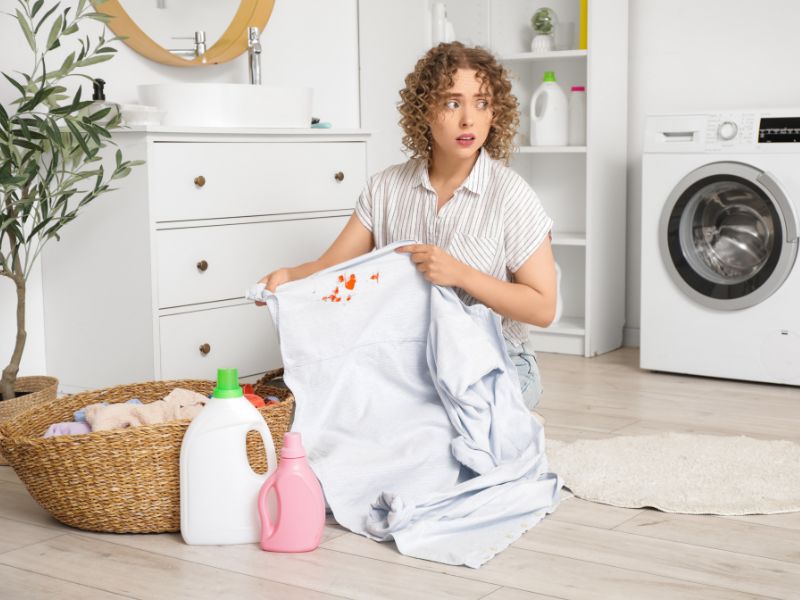
There is a particular kind of frustration that comes with pulling something out of the wash and finding the stain still there, or worse, baked in permanently from the dryer heat.
With kids in the house (or if you are a clumsy adult like me!), stains are basically a daily occurrence, and trust me, having a few reliable tricks up your sleeve makes all the difference.
The secret is almost always acting fast and knowing exactly what to use on what. Once you have these down, I can assure you that you will stop dreading the inevitable spaghetti-on-the-white-shirt moments.
A quick note before you try any of these: While these are widely used stain-removal methods, every fabric is different, and results can vary.
Always do a patch test on a hidden area of the garment first, especially on delicate fabrics, dark colors, and anything with special finishes or dyes. Apply a small amount of the treatment, wait a few minutes, and check for any discoloration or damage before using it on the stain itself. When in doubt, take the item to a professional cleaner rather than risk making things worse.
- Cold water for protein stains. Blood, egg, and dairy stains should always be rinsed in cold water first. Hot water sets protein stains permanently.
- White vinegar on sweat stains. Apply directly to the stain, let it sit for 30 minutes, then wash as usual. It works better than most commercial products.
- Dish soap on grease stains. A small drop of dish soap rubbed gently into a grease stain before washing cuts through the oil beautifully.
- Baking soda paste for tough stains. Mix baking soda with a little water to make a paste, apply it to the stain, and let it sit for at least 30 minutes before washing. For really stubborn stains, you can leave it on for up to a few hours. The longer it sits, the more time it has to break down the stain.
- Lemon juice and sunlight on yellowing whites. Squeeze lemon juice on the stain and lay the item in direct sunlight. The combination is a natural bleaching agent.
- Club soda on fresh stains. The carbonation helps lift the stain from the fibers before it sets. Always dab, never rub.
- Ice cubes to remove gum. Freeze the gum with ice until it is solid, then peel it off carefully before washing.
- Hydrogen peroxide on blood stains. Apply on fresh stains, let it bubble, then rinse with cold water. Do a patch test on dark fabrics first.
- Rubbing alcohol on ink stains. Blot the stain with rubbing alcohol using a clean cloth, working from the outside inward to avoid spreading.
- Cornstarch on oil stains. Sprinkle on the stain immediately, let it absorb the oil for 10 to 15 minutes, then brush off before treating and washing.
- Shampoo on collar and cuff stains. A little shampoo worked into those dingy necklines before washing breaks down skin oils and product buildup really well.
- Never rub a stain. Rubbing spreads it and pushes it deeper into the fabric. Always dab or blot from the outside in.
- Re-treat before drying. If a stain is still visible after washing, treat it again before putting it in the dryer. Heat sets stains permanently.
Washing machine hacks
We know that the washing machine does the heavy lifting, but it can only do its job well when you work with it rather than against it.
A lot of laundry problems, from clothes that still smell after washing to fabrics that wear out faster than they should, come down to how the machine is being used.
A few simple adjustments to your habits can make every single cycle more effective and extend the life of both your clothes and your machine.
- Do not overfill the drum. Clothes need space to tumble and rinse properly. Overfilling means soap does not wash out fully and clothes come out not quite clean.
- Use cold water for most loads. Modern detergents are formulated to work in cold water and it saves a significant amount of energy.
- Run an empty hot cycle with white vinegar once a month. Pour two cups of white vinegar into the drum and run a hot empty cycle to clean and deodorize the machine.
- Clean the rubber seal on front loaders regularly. Moisture gets trapped in the folds, and mold builds up quickly. Wipe it dry after every wash.
- Leave the machine door open after a cycle for some time. This allows the drum to air out and prevents musty smells.
- Use the right amount of detergent. More soap does not mean cleaner clothes. It actually leaves residue on fabric that attracts more dirt.
- Add a cup of baking soda to the drum for smelly loads. It works alongside your detergent to neutralize odors rather than just masking them.
- Use a mesh laundry bag for delicates and small items. Prevents tangling, stretching, and items disappearing into the drum seal.
- Wash towels separately from clothing. The lint from towels coats everything else in the load.
- Run a rinse and spin cycle if clothes smell musty after washing. They may have sat in the machine too long. Add a splash of vinegar and rinse again.
- Use a fabric-safe color catcher sheet. It absorbs any dye that bleeds during the wash, protecting the rest of the load.
- Wash new dark clothing with a cup of white vinegar before first wear. It helps set the dye and reduces how much they bleed in future washes.
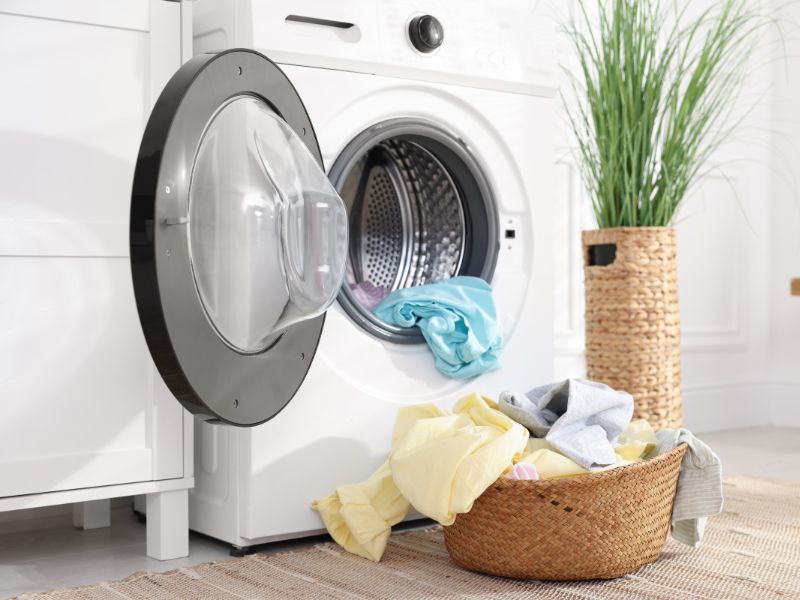
Detergent and fabric softener hacks
More product does not always mean better results, and that is something it took me a while to really accept.
The right detergent in the right amount, used the right way, does far more for your laundry than doubling up or layering on softener after softener.
This section is about getting genuinely clean, soft, fresh-smelling laundry without overcomplicating things or spending more than you need to.
- Switch to liquid detergent in cold water. Powder detergent does not always dissolve fully in cold water and can leave residue on clothes.
- Skip fabric softener on towels. It coats the fibers and reduces absorbency over time. Use white vinegar in the rinse cycle instead.
- Skip fabric softener on activewear too. It traps odors in synthetic fibers rather than releasing them.
- Use half the recommended detergent amount and see if it works just as well. Most of us use far more than we need.
- Add a few drops of essential oil to wool dryer balls for a natural, fresh scent. It is a lovely alternative to synthetic dryer sheets with no residue on your clothes. Just keep in mind that essential oils are flammable, so use no more than two to three drops per ball and make sure they are fully absorbed before putting the balls in the dryer. Make sure you do not apply essential oils directly to clothes or the dryer drum. And avoid adding essential oils directly to the wash cycle too, as they do not dissolve in water, can leave oily residue on fabrics, and may build up in the internal components of your machine over time.
- White vinegar as a fabric softener substitute. Add half a cup to the rinse cycle. It softens fabric, removes soap residue, and leaves no vinegar smell once dry. That said, use it occasionally rather than every single load, as frequent use can gradually wear down the rubber seals and gaskets in your machine over time. Always check your manufacturer’s guidelines before making it a regular part of your routine.
- Use enzyme-based detergent for baby clothes and children’s laundry. It breaks down organic stains like food and formula more effectively.
- Store detergent away from the washing machine. Humidity from the machine can clump powder detergent and degrade liquid formulas faster.
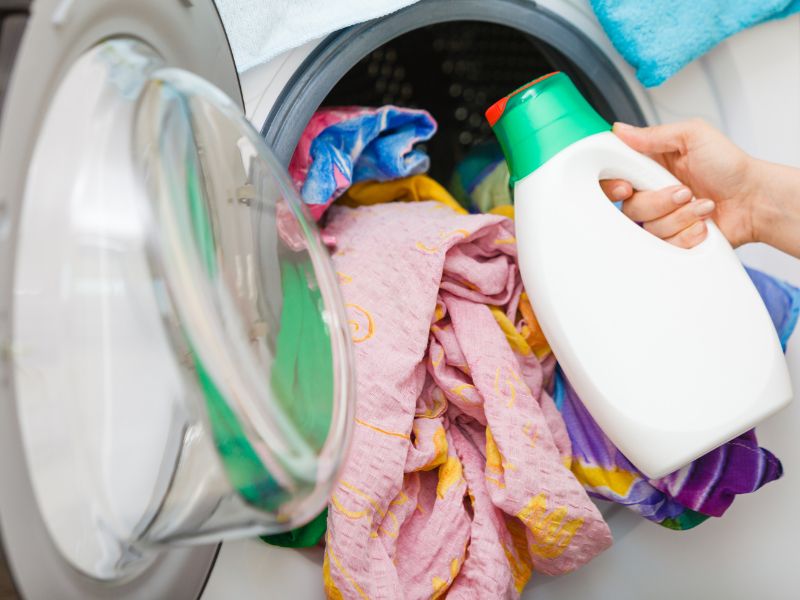
Drying hacks
Drying is where so many clothes quietly meet their end.
The wrong heat setting, the wrong technique, and leaving things in the machine too long after the cycle ends.
It adds up. But when you get drying right, clothes come out looking better, lasting longer, and needing far less ironing.
A few small changes here can honestly transform how your laundry looks and feels when it finally makes it to the closet.
- Shake out clothes before putting them in the dryer. It reduces wrinkles and helps items dry more evenly.
- Use wool dryer balls instead of dryer sheets. They reduce drying time, soften clothes naturally, and last for hundreds of loads.
- Never over-dry clothes. Taking them out while they are still slightly damp reduces wrinkles and is gentler on fabric.
- Dry jeans inside out on a low heat setting. It keeps the color from fading and protects the finish.
- Hang knits flat to dry instead of hanging them. Hanging stretches the fabric and distorts the shape.
- Roll delicates in a clean dry towel to remove excess water before air drying. Lay the item flat on a dry towel, roll them up together gently, and press down firmly along the length of the roll. The towel absorbs a surprising amount of water without putting any stress on the fabric. Never twist or wring delicates aggressively as it distorts the shape and damages the fibers. This method works beautifully for silk, fine knits, lace, and anything else too fragile for the dryer.
- Hang clothes outside on a breezy day for the best results. Fresh air and natural light work wonders for freshness and brightening whites.
- Dry sheets and large items partially in the dryer, then hang to finish. It prevents over-drying and reduces energy use.
- Put a dry towel in with a wet load for the first 15 minutes. It absorbs moisture and cuts down drying time noticeably.
- Clean the dryer lint trap before every single load. A clogged lint trap makes the dryer work harder and is a fire hazard.
- Hang clothes on the right kind of hangers to dry. Wide-shoulder hangers for tops and knitwear prevent the dreaded shoulder bumps.
Wrinkle and ironing hacks
Ironing is one of those tasks that feels endless and thankless and somehow always needs doing at the exact moment you are in a rush.
The good news is that most wrinkles can be prevented entirely with a bit of timing, and the ones that do sneak through can be dealt with quickly without ever getting the ironing board out.
These tricks are for anyone who wants to look put-together without spending their evenings hunched over an iron.
- Toss a few ice cubes into the dryer with wrinkled clothes. Run on high heat for 15 minutes. The steam they create releases wrinkles beautifully.
- Use a spray bottle of water to dampen wrinkled fabric before ironing. It makes ironing much faster and more effective.
- Hang clothes immediately after the dryer cycle ends. Leaving them sitting creates creases that are harder to remove.
- Steam in the bathroom. Hang a wrinkled item while you take a hot shower. The steam does most of the work for you. The steam relaxes the fabric fibers and smooths out creases without any ironing at all. Just make sure the item is not directly under the water spray.
- Iron clothes while slightly damp. The moisture helps release creases faster than ironing bone-dry fabric.
- Use a hair straightener to press small areas like collars and cuffs. It is precise and heats up in seconds.
- Press clothes on the reverse side to avoid shiny marks on dark fabrics.
- Roll clothes instead of folding when packing. It prevents creases and saves space in luggage.
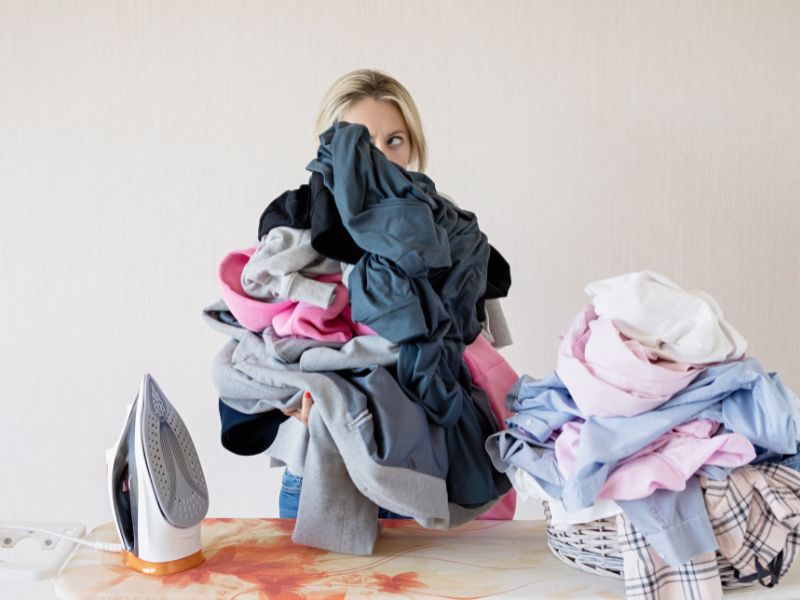
White clothes hacks
White clothing is beautiful and endlessly frustrating in equal measure.
It shows every mark, picks up every color, and has a way of slowly turning a sad shade of grey or yellow, no matter how carefully you treat it.
But keeping whites genuinely bright need not be as complicated as it feels, if you have these tricks up your sleeve.
A few natural ingredients and some simple habits go a long way, and you will find you do not need to rely on harsh bleach anywhere near as much as you thought.
- Wash whites in the hottest water safe for the fabric. Heat is one of the best natural brighteners.
- Add half a cup of baking soda to the wash cycle. It boosts detergent performance and brightens whites naturally.
- Soak dingy whites in a mixture of hot water and dish soap overnight. It lifts general dullness and buildup.
- Try oxygen bleach instead of chlorine bleach. It is gentler on fabric, better for the environment, and still very effective.
- Dry whites in direct sunlight whenever possible. Natural UV light is a gentle and effective whitener.
- Wash white towels and linens with a slice of lemon in the water. A surprisingly simple trick that really works.
- Separate whites rigorously. Even a pale pink or light blue item can transfer color onto whites over time.
Fabric care hacks
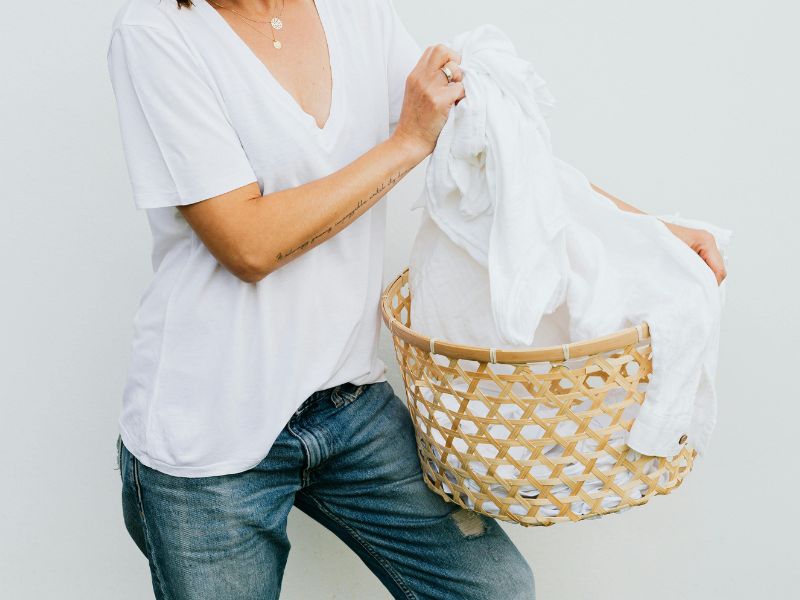
Clothes are an investment, even the everyday ones.
The way you wash, dry, and store them has a direct impact on how long they last and how good they continue to look.
A little extra care in the right places means less replacing, less waste, and a closet full of things that still feel worth wearing. It means you save your time, money, and energy in the long run.
- Wash clothes less often when possible. Most items do not need to be washed after every single wear. Airing them out is often enough.
- Hand wash delicate fabrics like silk and lace. A gentle swish in cool water with a drop of delicate wash is all they need.
- Use a gentle cycle for most everyday loads. It is kinder on fabrics and reduces wear over time.
- Spot clean small marks instead of doing a full wash. It saves water, energy, and reduces wear on the fabric.
- Fold knitwear rather than hanging it. Hanging causes the shoulders to stretch and the body to droop.
- Wash bras in a lingerie bag on a gentle cycle. The underwire and lace last so much longer than when thrown in loose.
- Air out shoes and sports bags before putting them away. It prevents mildew and keeps smells from building up.
Organization and laundry routine hacks
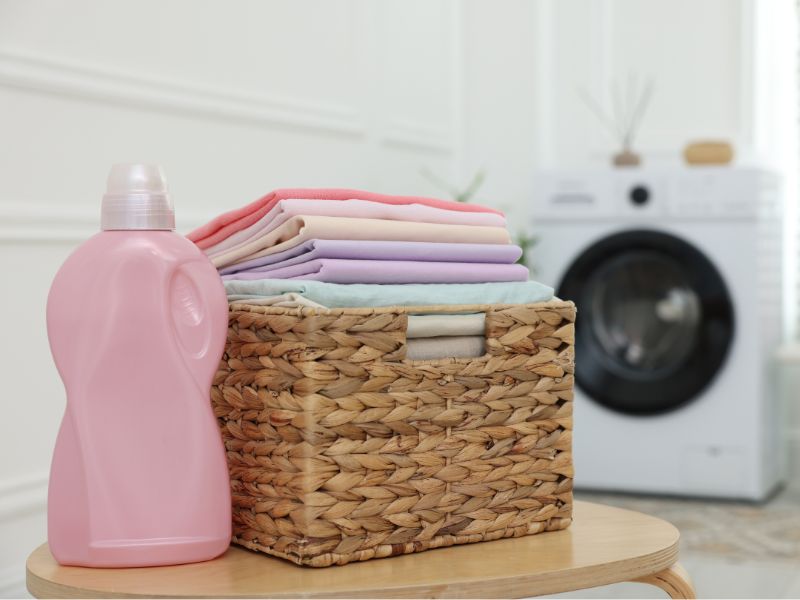
Laundry is not just about the washing, it is the whole system around it.
If you do all the laundry hacks only to dump your freshly cleaned clothes on a lonely chair and ignore them for days on end, you already know something needs to change about that last step.
A good routine takes so much mental load out of the process.
When everything has its place, and you have a loose rhythm going, laundry stops feeling like this looming task and becomes something you just do, almost on autopilot.
If you feel guilty, don’t worry!
- Do one load a day or at least every two days rather than saving it all for the weekend. It keeps laundry from piling up and feels far less daunting.
- Fold and put away laundry straight from the dryer. The longer it sits, the more overwhelming it feels. Make it a rule.
- Label your hampers or bins. Pick up a set of two or three laundry bins and label them clearly, lights, darks, and delicates, using sticky labels, a label maker, or even just a marker on masking tape. Place them somewhere accessible for the whole family, ideally in the bedroom or bathroom, where clothes are actually taken off. Once the system is set up, even young kids can sort their own laundry without any reminders, which is one less thing on your plate every single day.
- Keep a small lost-and-found basket near your laundry area. For lone socks, hair ties, and small items found in pockets.
- Use a foldable drying rack for items that cannot go in the dryer. It takes up minimal space and can be tucked away when not in use.
- Store your iron and ironing board in the same spot every time. You are more likely to actually use them when they are easy to access.
- Pin socks together before washing. No more hunting for pairs. Simple safety pins or sock clips work perfectly.
- Dedicate a small basket to items that need special treatment. Anything needing hand washing, stain treatment, or repairs goes there so it does not get lost in the pile.
- Do a quick sniff check before putting clean laundry away. Occasionally items come out of the wash still holding a faint smell, especially towels and gym clothes, and it is better to catch it before it goes into your closet.
- Set a timer when you start a load. It sounds simple but it stops that classic scenario of forgetting wet clothes in the machine for hours until they start to smell.
- Use your phone calendar or an alarm to remind you to switch loads. If you are working from home or busy with kids, it is incredibly easy to forget. A quick alarm labeled “switch laundry” takes two seconds to set and saves so much hassle.
- Assign laundry days to specific types of laundry. Bedsheets on Sundays, towels on Wednesdays, kids’ clothes on school nights. A loose schedule means nothing gets forgotten and nothing piles up to unmanageable levels.
- Teach kids to bring their laundry to the hamper as part of their bedtime routine. It takes about 30 seconds and means you are not hunting for stray clothes under beds and behind doors on wash day.
- Keep a small sewing kit near your laundry area. Buttons fall off, hems come undone, and small repairs are so much easier to do right away than after the item has been worn and washed several more times.
- Do laundry before you go on holiday and immediately when you return. Leaving dirty laundry sitting in a bag for days after a trip is one of the fastest ways to end up with a mountain that feels impossible to start.
- Fold kids’ clothes by outfit rather than by type. Stack a top, bottom, and any extras together so mornings are faster and kids can grab what they need independently.
- Use shelf dividers or small bins inside your closet to keep folded laundry from toppling. It sounds like a small thing but a tidy closet makes putting laundry away feel so much more satisfying and less like a chore.
- Do a ten-minute laundry reset at the end of every week. Check the hampers, run any small loads that are building up, and start the new week with a clean slate. It takes almost no time when done consistently.
- Keep a stain remover spray on a shelf near the laundry area, not hidden away. The easier it is to grab, the more likely you are to actually treat stains before they set.
- Batch your hand washing. Instead of washing delicates one at a time, collect them over a few days and do them all together in one basin session. It takes the same amount of effort for three items as it does for one.
- Roll and store folded clothes vertically in drawers. This is the method popularized by organizing experts and it genuinely works. You can see every item at a glance, nothing gets buried, and drawers stay neat far longer.
- Keep a donation bag in or near your closet at all times. Every time you do laundry and pull out something that no longer fits or that you have not worn in months, it goes straight in the bag. No more cluttered drawers full of clothes you never actually wear.
- Do a five-minute tidy of the laundry area once a week. Wipe down the machine, clear any clutter from the top of the dryer, refill your detergent, and check your supplies. A clean and organized laundry space makes the whole task feel so much less chaotic.
- Give yourself grace on the hard weeks. Some weeks the laundry piles up and that is just life. The goal is not perfection, it is a system that is easy enough to come back to even after a few days off. A good routine bends without breaking, and so do you.
There you have it, 100 laundry hacks to make one of the most repetitive chores in the house feel a little more manageable.
You do not need to implement all of these at once. Pick two or three that feel useful right now and build from there.
I get that laundry might never be your favorite thing to do, but with the right tricks in your back pocket, it can at least stop feeling like such a production.
Save this post for the next time you are staring at a mountain of clothes and wondering where to even begin.