How to let go of clothes you are emotionally attached to
We often think decluttering is just about making space – toss what you don’t wear, donate what doesn’t fit, fold what you love – and voilà, a calmer closet.
But if you’ve ever stood in front of your wardrobe clutching an old dress or worn-out jeans and thought, “I just can’t let this go,” you know it’s not that simple.
Because letting go isn’t only physical. It’s emotional.
We don’t just wear clothes. We live memories in them.
Each piece in your wardrobe can hold a story, a sense of identity, or even guilt. That’s why some clothes feel impossible to donate, even when you’re ready for a fresh start.
In this post, we’ll explore:
- Why clothes carry emotional weight
- The psychology behind attachment and guilt
- What happens in your brain when you struggle to let go
- And practical, compassionate steps to declutter with peace, not pressure
Why We Form Attachments to Clothes
When it comes to closets, logic rarely wins.
What looks like a simple decision, “Keep or donate?”, can stir complex emotions.
Our attachments to clothing go beyond fabric; they speak to identity, memory, and even self-worth.
The next few sections explore the most common categories of emotionally charged clothing. The pieces that tug at your heart more than your logic.
Each one reveals a different reason we struggle to let go, whether it’s memories, identity, guilt, or hope for the future.
Recognizing which emotional thread keeps you tied to an item is the first step toward releasing it with compassion instead of guilt.
Let’s take a look at each category.
1. Memory Tied Clothing
That graduation dress. The blazer from your first big interview. The sweater your mom gave you one Christmas.
Clothes like these serve as emotional bookmarks in our lives. They remind us where we’ve been and who we were in those moments.
Psychologists call this phenomenon “object attachment.”
It’s our way of connecting memories to physical items – similar to how a child clings to a favorite stuffed animal for comfort.
The problem is, as adults, we often underestimate how heavy those attachments can become.
But here’s the truth: memories live inside you, not in your closet.
Keeping every nostalgic item can eventually fill your space – and your mind – with the past instead of the present.
2. Identity and Self-Concept
Our wardrobes often represent the different selves we’ve been:
- The “career me” who wore pencil skirts and blazers.
- The “carefree me” from college, all graphic tees and denim.
- The “fit me,” represented by workout clothes from a season of health focus.
Letting go of those clothes can feel like letting go of who we were.
Research published in the Journal of Consumer Research explains that people often struggle to part with possessions when those items become intertwined with their sense of self. When clothing reflects identity, letting go can feel like losing a piece of who we are (Belk, 1988).
That’s why decluttering often feels more like emotional therapy than organization.
The key question becomes: Does this item represent who I am today – or who I used to be?
3. The Fantasy Self
Raise your hand if you’ve said this:
“I’ll wear this when I lose ten pounds.”
“I’ll need this for that party someday.”
“I’ll wear this once I get back into my groove.”
This is what I call the fantasy wardrobe. These pieces reflect our idealized selves, not our actual lives.
Holding on to them can feel like holding on to hope – but it often fuels quiet shame.
Instead of inspiring you, they whisper “not enough” every time you see them.
When you release these “someday” pieces, you make room for the real you – the one who deserves clothes that fit the present.
4. Guilt and Obligation
Clothing guilt is the uninvited guest in nearly every decluttering journey.
- “I can’t donate this; it was expensive.”
- “It was a gift; I owe it to keep it.”
- “Throwing it away would be wasteful.”
But the money has already been spent.
The gift already served its purpose – someone thought of you and showed love. And keeping an item out of guilt doesn’t make it more appreciated; it just keeps you stuck.
When you release guilt-based clutter, what remains is intentional love for the pieces that reflect your authentic life.
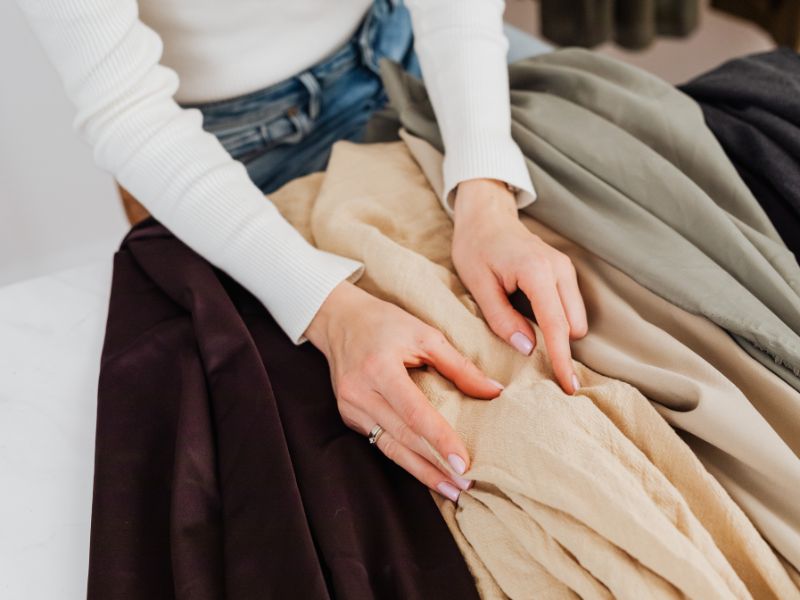
What’s Happening in Your Brain When You Can’t Let Go
Here’s something fascinating: neuroscience shows that letting go literally hurts.
Research shows that when people – particularly those who struggle with hoarding – are asked to sort through and discard their belongings, their brains display increased activity in the anterior cingulate cortex and the insula, regions linked to emotional distress and the processing of physical pain.
In other words, the brain reacts as if it’s experiencing real distress or loss.
So, it’s not your fault that decluttering feels emotionally painful because your brain interprets it as a loss.
But instead of letting yourself be stuck there, once you overcome that brief discomfort, your nervous system rewards you with calm and clarity.
That’s why people often say they feel “lighter” after finally letting something go.
It’s not your imagination – it’s your brain signaling peace after tension.
Common Clothing You Struggle to Donate (and Why)
The table below breaks down some of the most common types of clothing people struggle to let go of – and explains what each really represents, along with a gentle mindset shift to help you release them with more ease and self‑compassion.
| Type of Clothing | Emotional Link | What It Represents | Mindset Shift |
|---|---|---|---|
| “Someday” clothes | Hope, pressure | Fantasy version of self | Dress for who you are today |
| Sentimental items | Nostalgia | Memories of the past | Keep one photo, not everything |
| Expensive pieces | Guilt, regret | Wasted money | You paid for the lesson, not just the item |
| Gifts | Obligation | Other people’s expectations | The gift fulfilled its purpose – it showed love |
| Lifestyle relics (old jobs, hobbies) | Identity | Past chapters | Thank that chapter and move forward |
Once you recognize the emotions stitched into your clothing, you can start approaching decluttering from a place of understanding rather than pressure.
Knowing the why behind your attachments makes it easier to practice gentle letting go.

Now that you have some idea about the type of emotional hold you have on your clothes, let’s learn about how and where to start the decluttering process.
How to Let Go Without Feeling Like You’re Losing Yourself
You don’t overcome emotional clutter by “forcing” detachment. Forcing might not work for everyone when the attachment is deep.
You do it by approaching your possessions with compassion.
Here are small but powerful ways to do just that.
1. Start Small
Don’t begin with your most sentimental items. Start with something neutral, like old pajamas or duplicates. Early wins build emotional momentum.
Research in behavioral psychology calls this the compounding success effect – small steps reinforce positive habits and confidence.
2. Name the Feeling
When you struggle to donate something, pause and ask:
“What emotion is keeping me attached?”
It might be nostalgia, guilt, or fear of missing out. Labeling the emotion helps separate it from the object.
Once it’s named, it loses power. You can also refer to the above table to name the feeling and understand the mindset shift you need to acquire.
3. Take a Memory Snapshot
Take photos of sentimental items before parting with them. Keep them in a digital “story closet” folder. This lets you preserve meaning without physical clutter.
4. Say a Gratitude Goodbye
It may sound sentimental, but say, “Thank you for being part of that season of my life.”
Gratitude reframes letting go as closing a chapter rather than losing one.
5. Release the Guilt
Keeping something you don’t use doesn’t make up for the waste – it just doubles it.
Instead, think of what that item can do now, in someone else’s hands.
Use perspective: Think in terms of “enough use”.
For some pieces, wearing them ten times might mean they’ve served their purpose – especially trend-based or occasion-specific items.
For others, especially timeless, high-quality pieces, you might get fifty or even a hundred wears before they truly feel complete.
I would say it’s not about counting; it’s about appreciating that you’ve already received value from what you own.
If it’s no longer serving you, it’s okay to let it go. Now, it can serve someone else.
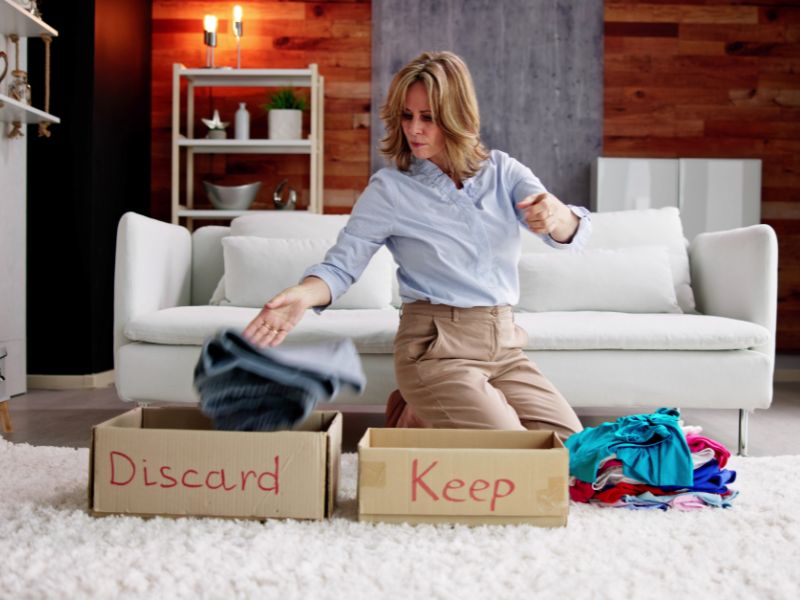
6. Reframe Donation as Empowerment
Every piece you donate becomes a stepping stone for someone else’s confidence. You’re not discarding; you’re redistributing potential.
In the U.S., incredible organizations make sure your donations count:
- Dress for Success: Empowers women entering the workforce with professional attire.
- Goodwill: Provides job training programs through sales of donated goods.
- The Salvation Army: Offers clothing and resources to families in need.
- Project GLAM: Provides free prom dresses to teens who can’t afford them.
- Pickup Please: They accept a wide range of acceptable donations, including clothing, shoes, purses, household items, toys, etc.
- Planet Aid: Places yellow donation bins in accessible locations across the U.S. to collect clothes and shoes, which are recycled or reused to reduce waste.
- One Warm Coat: Focuses specifically on collecting and redistributing coats to people in need during cold months.
- Soles4Souls: A great option for shoes and apparel donations. Items are distributed globally to people living in poverty and disaster‑affected areas.
- Room to Grow: Accepts baby and toddler clothing, gear, and books to support families raising children in poverty.
- St. Vincent de Paul Society: Local SVDP chapters throughout the U.S. collect clothes and household items to help low‑income families.
When you donate, you’re part of a chain of empowerment. Your clothes don’t die in a landfill – they begin a second service life.
7. Create Intentional Memory Boundaries
It’s okay to keep a few deeply meaningful items.
Try a small “Memory Box” for pieces that genuinely warm your heart – your wedding veil, a concert tee, your child’s baby hat.
This allows nostalgia with boundaries – you honor your past while protecting your peace.
What You Gain When You Let Go
It’s easy to focus on what you’re losing, but the gifts of letting go are abundant.
When it comes to doing hard things, it’s always best to focus on the results rather than the effort.
Just like doing exercise. You don’t always enjoy the process. But after the workout, you feel great.
I agree it is hard to let go of sentimental items, but when you focus on what you earn after the hard part, you feel more motivated to do it.
Here are some gains you can focus on:
1. Mental Clarity and Calm
A UCLA study found that high household clutter correlates directly with high cortisol (stress hormone) levels – especially in women. A decluttered closet equals a calmer mind.
2. A Closet That Reflects the Present You
When your wardrobe matches your current life stage, getting dressed feels empowering.
You’re no longer trying to fit into your clothes – they fit into you.
3. Stronger Emotional Awareness
Decluttering trains your inner voice to question: Am I keeping this out of love or fear?
That awareness then spills over into other life areas – relationships, work, even digital clutter.
4. Generosity in Action
Every shirt, dress, or shoe you donate becomes part of someone else’s story.
You don’t lose – you pass forward.
5. Emotional Relief
Decluttering lifts emotional weight. Letting go of clothes tied to old stories brings a sense of closure and inner calm.
6. A Sense of Accomplishment
Finishing a decluttering session gives you an instant confidence boost – it is proof that you can take control of your space and habits.
7. Gratitude in Motion
Passing items to others turns gratitude into action. It’s your way of saying “thank you” while paying generosity forward.
8. Stronger Community Connection
Your donations energize local networks – helping families, shelters, and programs that support those starting fresh.
9. Reduced Waste
You keep clothes in use and out of landfills, supporting a circular fashion cycle that’s better for the planet.
10. Financial Awareness
Seeing what you truly wear reveals spending patterns and curbs impulsive shopping, creating smarter habits long‑term.
7. Mental Space & Focus
A clutter‑free closet equals a quieter mind. You’ll think more clearly and make decisions faster – mornings become smoother.
8. Confidence Reset
Wearing only clothes that fit and flatter strengthens your self‑image. You start your day already feeling capable and comfortable.
9. Inspiration for Others
Your decluttering journey sets an example. When friends and family see the difference, they often feel inspired to simplify too.
10. Tax Deduction Advantage
Charitable donations can count toward tax deductions, making generosity both fulfilling and financially rewarding.
11. Environmental Stewardship
Every reused piece saves resources spent on new fabric production – water, energy, and labor all benefit.
12. Energy Renewal
Less clutter shifts the energy of your home. Spaces feel lighter, fresher, and more inviting when every item earns its place.
13. Simplified Style
With fewer items, your personal style becomes clearer. You’ll naturally reach for what aligns with who you are now.
14. More Time for Living
Fewer options mean faster choices. Getting dressed, doing laundry, and organizing all take less time, leaving more room for life.
15. Charitable Empowerment
Your clothes can quite literally help someone get a job, attend school, or face a tough season with dignity.
16. Self‑Forgiveness
Releasing pieces you never wore helps you let go of self‑criticism. You stop judging past decisions and start practicing grace with yourself.

10 Reflective Questions for Emotional Decluttering
Here are a few gentle questions to help you pause, reflect, and connect with what’s really behind the items you’re holding onto.
These aren’t about judgment or forcing decisions; they’re about understanding your emotions, your needs, and the meaning your clothes carry.
Take a breath, grab a notebook if you’d like, and use these reflections as guidance toward the clarity and freedom you are looking for.
- Does this item represent who I am today?
- Would I buy this again right now?
- Am I keeping it out of love or guilt?
- What emotion comes up when I touch this?
- Did this item already serve its purpose?
- Could it serve someone better than it serves me now?
- What story am I holding onto with this piece?
- Do I feel lighter or heavier when I imagine letting it go?
- If my best friend owned this, what advice would I give her?
- What new possibilities could enter my life with this space?
Your Closet Is a Mirror of Your Inner Life
As you sift through hangers and bins, you may realize something powerful: Decluttering isn’t just about clothes, it’s about clarity.
Every decision to release a garment is a gentle statement that says,
“I’m choosing now over then.”
“I’m ready to evolve.”
Your closet is a reflection of your chapters.
And when you intentionally let go of what no longer aligns, you make space for new ones to begin, which is so liberating even to think about.
Final Thoughts
Letting go isn’t a cold-hearted act. It’s an act of tenderness.
Each piece you release says, “Thank you for who I was. I’m ready for who I’m becoming.”
You don’t have to erase your past to live fully in the present – you just have to stop carrying it on hangers.
So when you next stand before your wardrobe and feel the tug of hesitation, remember this:
You’re not throwing away memories. You’re creating room for more meaningful ones.
I hope this post has helped you in at least one small way to gather the courage required to declutter your closet and become the next version of yourself who is not a hoarder.
What are some things you’d add to this post?
Do you have any other reasons for emotional hoarding that I haven’t mentioned here? Let me know in the comments!
I’d love to hear your thoughts!
More to read:
- How to Stop Hoarding Clothes (A Step-by-Step Plan to Declutter Your Wardrobe)
- How to Declutter when You Are Stuck and Overwhelmed with Clutter
- 50 Closet Organization Hacks That’ll Change How You Use Space Forever
- How to Stop Overbuying Clothes & Build a Closet You’ll Actually Wear
- What To Do After Decluttering Your Closet (So You Don’t End Up Hoarding Again)
- How to Declutter When You’re a Hoarder (and Don’t Know Where to Start)