What To Do After Decluttering Your Closet (So You Don’t End Up Hoarding Again)
Note: This is the second part of my decluttering closet series.
If your goal is to stop hoarding and finally create a closet you love, you’re in the right place.
I’ve been writing about the full cycle – decluttering, rebuilding, and maintaining – and this post is all about what comes next: how to keep that hard-earned space clutter-free for good.
Here is the first part if you want to check it out first:
Now, let’s talk about life after the declutter.
You finally did it.
You decluttered your closet – pulled everything out, made those hard “keep or toss” decisions, and created a space that actually breathes.
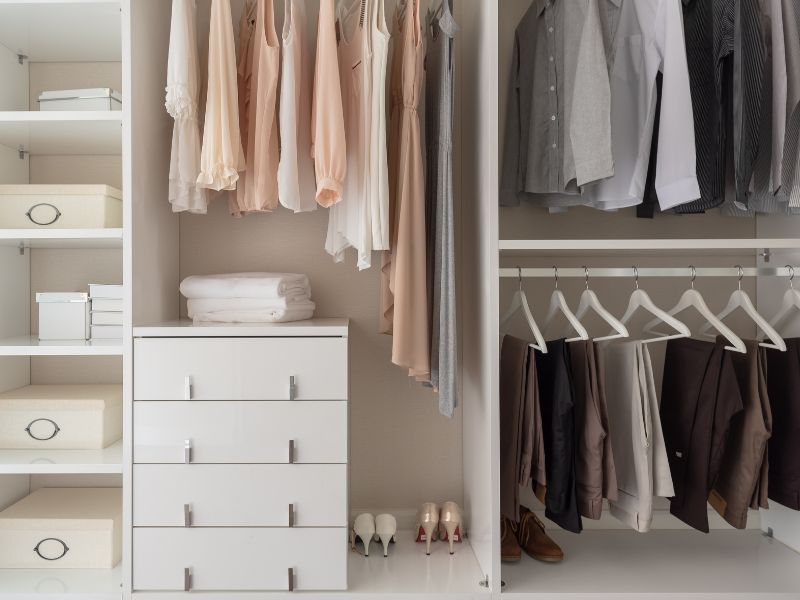
You can see the back wall again. Your hangers match. You can finally find what you want to wear without digging through layers of clothes you forgot existed.
But here’s the tricky part no one talks about: keeping it that way.
Because a few weeks or months from now, that same closet can slowly fill up again, especially if you have had the habit of hoarding in the past.
A sale notification.
A “treat yourself” moment.
A bad day.
And before you know it, the calm and clarity you created can quietly vanish under another pile of impulse buys and “maybe one day” clothes.
So, what do you do after decluttering your closet to make sure you never end up hoarding again?
This post will walk you through the habits, mindset shifts, and small systems that help you maintain your space with ease and intention.
1. Give every item a clear home
After decluttering, the best thing you can do is assign a home to everything you decided to keep.
If something doesn’t have a designated space, it’ll eventually end up on a chair, dresser, or laundry basket corner. That’s how clutter creeps back in.
You don’t need fancy organizers – you just need clarity.
For example: tops hang here, jeans go there, accessories get one basket, and belts live on a hook.
This helps you visually notice when something doesn’t belong.
And it naturally sets a boundary – once your “top” section is full, it means something has to go before anything new comes in.
2. Create a “holding zone” for maybe items
We all have that small pile of “I’m not sure” clothes after a declutter – pieces we couldn’t let go of just yet.
Instead of putting them back into the main closet (where they’ll blend in again), create a temporary holding box. Label it with a date three months ahead.
If you don’t reach for anything inside by then, it’s safe to let go.
This helps you declutter confidently without feeling anxious about getting rid of something too fast – and it prevents regret decluttering.
3. Practice the one-in-one-out rule
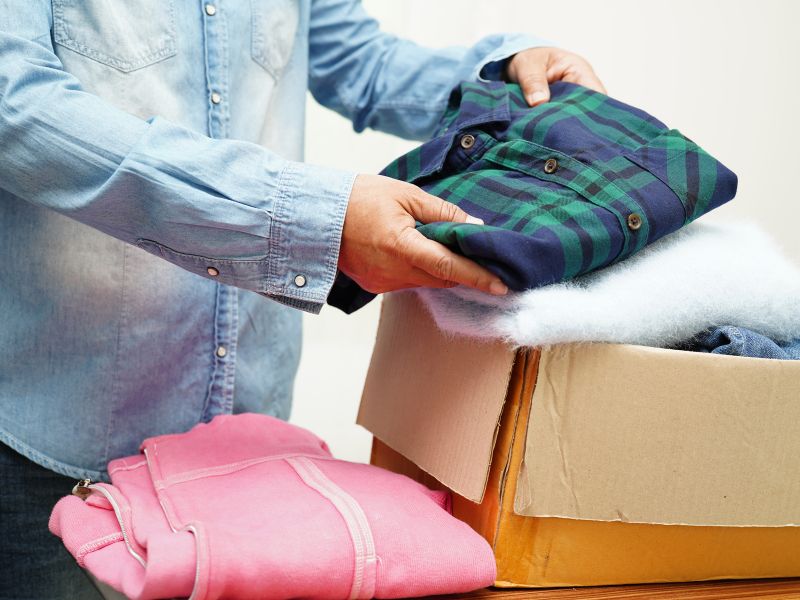
This simple rule is the single most effective way to keep your closet clutter-free.
For every new item you bring in, one item has to go out.
Bought a new white shirt? Let go of an old one that’s stained or doesn’t fit.
This keeps your closet balanced and helps you think twice before shopping. It transforms shopping from emotional to intentional.
If sticking to one-in-one-out feels limiting at first, try doing one-in-two-out for a while – it helps your closet feel lighter faster.
4. Check your shopping triggers
Decluttering is easy compared to understanding why you accumulate clothes in the first place.
Ask yourself honestly:
- Do I shop when I’m bored or stressed?
- Do I buy clothes to feel productive or rewarded?
- Am I influenced by trends or social media?
Understanding your triggers helps you break the emotional loop of buying to feel better.
Next time the urge hits, pause and ask:
“What emotion am I trying to fix right now?”
Most often, it’s not about needing clothes – it’s about needing comfort, validation, or distraction.
5. Keep a running wishlist
Instead of buying impulsively, keep a curated wishlist – either on your phone or in your notes app.
When you find something you like online, add it there instead of straight to cart. Revisit it after a week or two. If you still want it and can think of three ways to wear it, only then buy it.
This small delay builds mindfulness and drastically cuts down random purchases.

6. Do a weekly closet reset
Clutter doesn’t appear overnight – it sneaks in through daily habits.
A quick Sunday reset ritual keeps it under control.
Here’s what it looks like:
- Hang up anything lying on the chair or dresser.
- Fold laundry and return clothes to their place.
- Check if any item needs mending or washing.
- Put stray accessories or scarves back in place.
Ten minutes once a week is all it takes to prevent overwhelm later.
Related: How to stop accumulating clutter before it starts
7. Revisit your closet seasonally
Your life, style, and body evolve – so your closet should too.
Every 3–4 months, do a mini-edit.
Pull out seasonal items and reassess. Check what you didn’t wear.
Store or donate anything that doesn’t serve your current season of life.
Seasonal resets also help you stay intentional with trends – it’s easier to add one thoughtful piece when you have clarity on what you already own.
8. Track what you actually wear
You might be surprised by how few clothes you truly use.
Try this:
Turn all your hangers backward.
When you wear something, put it back facing forward. After a few months, you’ll clearly see which items you never touched.
This visual trick helps you declutter naturally and recognize your true style – not your aspirational one.
Alternatively, use a clothing tracker app or jot down outfits in a notebook.

9. Build a capsule for everyday life
Now that your closet is simplified, you can easily build a mini capsule of go-to outfits for your everyday routines – work, errands, school runs, and casual weekends.
These are your real life clothes, not the fantasy ones you wear twice a year.
When you have a small rotation of trusted outfits that fit and flatter, you reduce the temptation to overbuy.
You’ll start shopping with intention – to fill gaps, not to fill emotional voids.
10. Make shopping a planned event, not an emotional one
Most of us don’t go hoarding clothes because we lack space – we do it because shopping feels like self-care.
But what if you reframed shopping as something strategic?
Plan two or three intentional shopping sessions a year – maybe one for summer, one for winter. Create a list of what you truly need before you go.
This structure gives you the same sense of joy without the chaos of impulsive decisions.
11. Address clothing guilt
Do you have items that you keep because you spent money on them – even though you don’t love or wear them?
That’s clothing guilt.
The money you spent on it is gone, the day you bought it. But keeping something out of guilt doesn’t refund the cost – it just keeps the clutter.
It lies there taking up space not only in your house, but also in your mind.
Try this mindset: “That piece served its purpose. It taught me what doesn’t work for me.”
Release it with gratitude and make peace with the lesson.
You’ll shop smarter next time – and your closet will hold only things you truly enjoy.

12. Audit your closet for duplicates
Sometimes clutter hides in repetition.
Three pairs of black jeans, five white tees, or endless striped tops. You keep buying what feels safe – but end up wearing the same one or two favorites.
Take a look at your duplicates. Choose your absolute best version of each item and let the rest go.
When every item feels like a “favorite,” you naturally wear more and buy less.
13. Store seasonal or sentimental clothes intentionally
Out of sight shouldn’t mean out of mind.
Use labeled boxes or vacuum bags for seasonal pieces. Keep only what you’ll truly wear next year, not everything “just in case.”
For sentimental items – like wedding outfits or pieces tied to memories – limit them to one small keepsake box. Photograph them if that helps.
Boundaries make space for life as it is now, not as it was.
14. Build a donation routine you actually follow through on
How many times have you decluttered, bagged items for donation, and left them sitting by the door for weeks?
Create a simple donation rhythm.
For example:
- Keep one ongoing “donate” bin in your closet. Make it easy to let go the moment you realize something no longer serves you. Keep a small basket or bin in plain sight so you can drop items in right away instead of tucking them back into drawers “for now.”
- Schedule a monthly drop-off on your calendar. Pick one day each month – like the first Saturday – and mark it on your calendar. Having a set day ensures the donation bags don’t linger in corners or car trunks for weeks. It becomes part of your normal rhythm, just like laundry or grocery runs.
- Keep a bag or box that’s easy to access. If it’s buried behind storage bins, you’ll never use it. Place it where you can toss items quickly when you realize you don’t love or need them anymore.
- Label it clearly. Write “To Donate” or “Let Go” on it – so everyone in the family knows what it’s for (and no one “rescues” items you’ve already decided to part with).
- Set a capacity limit. Once the bin is full, that’s your cue to drop it off. This prevents bags from piling up endlessly.
- Choose one or two donation spots you love. When you have go-to places – a nearby charity, a women’s shelter, or a local thrift – donating becomes effortless instead of another decision to make.
- Keep donation bags in your car trunk. If you often forget to take them out, placing them in the car means the next time you’re out, they’re already with you.
- Try a mini “declutter drop” rule. Each time you run errands, take one small bag along to donate. It turns giving away items into a natural part of your routine.
- Track your donations. Keep a small note in your phone or planner of what you’ve given away. Seeing how much you’ve let go of is motivating – and reminds you how little you truly miss.
- Make it family-friendly. Encourage your kids or spouse to use the same bin for their unused items. It builds a household rhythm of letting go.
The key to success is in making it part of your normal routine, not a once-a-year event.
This way, outgrown or unused items exit your home before they can pile up again.

15. Celebrate your closet’s breathing space
It sounds small, but acknowledging your progress matters.
When you open your closet and see space, pause and appreciate it. This positive reinforcement helps you value the peace of minimalism more than the thrill of new purchases.
At least once a week, light a candle, play music, or just smile knowing your mornings are calmer now. Gratitude keeps you consistent.
16. Create visual boundaries for clothes
If you tend to hoard “just one more” shirt or dress, use visual boundaries as gentle reminders.
For instance: limit your hangers to a fixed number (say 30). Keep only two shelves for jeans and sweaters. Use one basket for scarves or belts.
When space fills up, that’s your cue to pause and evaluate. Boundaries give you structure without restriction.
17. Take style notes in real life
One reason people re-accumulate clutter is that they lose touch with what actually suits them.
Start paying attention to what outfits make you feel good in real life – not just online. Take a mirror selfie when you love an outfit.
Over time, you’ll start to see patterns – maybe you love soft neutrals, flowy silhouettes, or clean lines.
Knowing your personal style is the best defense against future clutter, because it helps you shop with clarity instead of confusion.
18. Practice a “closet pause” before buying anything
Whenever you feel tempted to shop, give yourself a 48-hour pause.
During that time, look through your current closet and see if you already have something similar. Try to style it in a new way.
Most of the time, that small pause saves you from repeating purchases or cluttering again.
19. Re-evaluate your closet when life changes
Big life changes – a new job, motherhood, moving cities – all affect your wardrobe needs.
When those transitions happen, revisit your closet. Identify what’s still relevant and what’s not.
Keeping your closet aligned with your current life season prevents you from hanging onto things that no longer make sense.
20. Build intentional closet habits (your long-term rituals)
Here’s a simple framework you can adopt:
- Weekly: quick 10-minute tidy-up
- Monthly: review what you didn’t wear and note gaps
- Seasonally: small declutter + wishlist update
These small rituals make a big difference. Your closet becomes self-maintaining instead of something that requires another big purge.
You can even make it cozy – play your favorite playlist, light a candle, make it feel like self-care rather than a chore.
21. Notice emotional clutter in clothing form
Some clothes represent old identities – a version of you that no longer exists.
Maybe it’s the corporate blazers you no longer wear, or jeans that remind you of a size you’re not anymore.
Holding onto them anchors you to the past.
Ask yourself: “Is this item supporting who I am now, or who I was?”
Keeping only what fits your present life brings peace and helps you stop hoarding clothes out of nostalgia.
22. Be okay with owning less
We’re conditioned to think “more options = better.” But having fewer pieces you love actually gives you more clarity.
Your mornings are faster. Your decisions are lighter. And your confidence grows because everything you own feels like you.
The goal isn’t to have the tiniest closet – it’s to have a closet that supports your real life.
23. Re-define success in your closet
In a world that celebrates hauls and newness, owning less can feel boring.
But here’s a quiet truth: success isn’t about how much you own – it’s about how peaceful your space feels.
Every time you resist a mindless purchase, you’re creating more calm for your future self.
And that’s something to be proud of.
24. Treat your closet like a living space
Your closet isn’t just storage – it’s part of your environment, and environments affect your energy.
Keep it inviting. Add a scented sachet, a small plant, or a favorite framed quote.
When your closet feels beautiful, you’ll treat it with more respect. It becomes a reflection of how you want to feel daily – calm, intentional, and clear.
25. Keep learning and adjusting
Decluttering isn’t a one-time project – it’s an ongoing relationship with your belongings.
You’ll make mistakes, you’ll buy things that don’t work, and that’s okay.
The key is to notice patterns, learn, and keep moving toward simplicity.
Final thoughts
Decluttering your closet is a fresh start – but staying decluttered is where the true transformation happens.
When you choose to live with awareness – that is, shopping with purpose, maintaining small habits, and honoring your space – your closet becomes more than just a storage area.
It becomes a reflection of a calmer, lighter version of you.
And every morning, when you open those doors, you’ll be greeted not just by clothes – but by clarity.
If you’re ready for the next step, read my post: How to Stop Overbuying Clothes and Build a Closet You’ll Actually Wear, where I guide you through creating a wardrobe that truly fits your real life.
More posts:
- 50 Closet Organization Hacks That’ll Change How You Use Space Forever
- The only 5 Decluttering Questions you’ll ever need (Free PDF)
- How to declutter when you are stuck and overwhelmed with clutter
- 17 common decluttering mistakes you don’t know you’re making (&how to avoid them)
- 100+ things to declutter from your home right now
- 36 ten-minute decluttering tasks to organize your home easily
- 10 daily decluttering habits of people who have tidy homes