How to Declutter When You’re a Hoarder (and Don’t Know Where to Start)
You look around and it hits you again – that heavy, sinking feeling in your stomach.
The piles on the counters. The boxes you never opened. The random things stacked in corners that once had a purpose but now just whisper failure.
You tell yourself you’ll start tomorrow, or this weekend, or once life “settles down.” But the truth is, it’s not just about time. It’s about the emotional weight you feel every time you try to face it.
You might not call yourself a hoarder – maybe you just keep “a lot of things.” But somewhere inside, you know it’s become too much. You want peace, space, and calm again.
This isn’t another “throw half your stuff away” post. It’s a gentle guide to help you untangle the emotions behind your clutter and find a way to start – one small step at a time.
Before We Begin: Why Normal Rules Don’t Work Here
If you’ve ever tried traditional decluttering advice – like “If you haven’t used it in a year, toss it” or “one in, one out” – and felt worse instead of better, that’s not your fault.
Those methods are designed for people with mild clutter, not for those who’ve formed emotional attachments to things.
When you struggle with hoarding, you’re not just sorting objects – you’re confronting fear, memory, identity, and guilt all at once.
So if “normal rules” haven’t worked, let that go. You don’t need fast, harsh methods. You need gentle momentum and emotional safety.
1. Understand why it’s so hard to let go
Before you pick up a single thing, take a deep breath and acknowledge this: hoarding isn’t laziness. It’s protection.
You might hold on to things because of fear – fear of needing them later, fear of wasting money, fear of regret. Or maybe it’s comfort.
Maybe each object holds a memory, a promise, or a version of yourself you don’t want to lose.
There’s often a story behind every pile.
- The gifts you can’t part with because you don’t want to seem ungrateful.
- The kid’s clothes you kept because they remind you of tiny fingers and bedtime giggles.
- The craft supplies from that hobby you never had time for but once hoped would bring joy.
You’re not broken for feeling this way. You’ve just been trying to hold on to comfort, safety, and meaning in physical form. But now, the weight of all that “meaning” is crowding out your peace.
Decluttering starts with compassion – not for your home, but for yourself.
2. Recognize the different kinds of clutter you’re facing
Not all clutter is the same.
Some things you keep because you love them, others because you feel guilty, and some simply because you forgot they were there.
When you start identifying why you’re keeping certain things, it becomes easier to let them go.
Here are some of the types of clutter you might find in your home:
Sentimental clutter
Old photos, handmade cards, souvenirs, and baby clothes – these are your heart’s archives.
They matter, but not everything has to be kept forever.
Keep a small “memory box” and choose intentionally. You’ll value those few, curated treasures far more than a dozen dusty bins in the attic.
‘Just in case’ clutter
This one’s sneaky.
The extra cords, boxes, old containers, and random screws – because you never know.
The truth? You’ll probably never need them.
Ask yourself, “If I needed this tomorrow, could I replace it easily?” If yes, you don’t need to store it for years.
Aspirational clutter
The treadmill collecting dust.
The expensive art supplies. The dresses for “someday.”
These things represent who you wish you were – not who you are right now.
Letting them go isn’t giving up on growth; it’s creating space for the life you’re actually living.
Information clutter
Endless screenshots, saved recipes, piles of unopened mail – they steal your attention every day.
Choose a daily time slot, set a timer, and remove five pieces of digital or physical info. Make it a daily ritual.
It’s a small act, but it chips away at the noise until clarity returns.
3. Understanding the spectrum of hoarding
Hoarding isn’t one-size-fits-all. It exists on a spectrum.
Some people are overwhelmed by the choices clutter brings, and others are surrounded by so much stuff that moving through their home feels impossible.
No matter where you fall on that scale, your feelings are valid – and so is your desire for change.
The process looks different for everyone. If your home is severely cluttered, your first win might not be an empty shelf – it might just be clearing a safe path to walk through.
If your space is mildly cluttered, progress might look like reclaiming one surface at a time.
Both are equally important, equally brave steps forward.
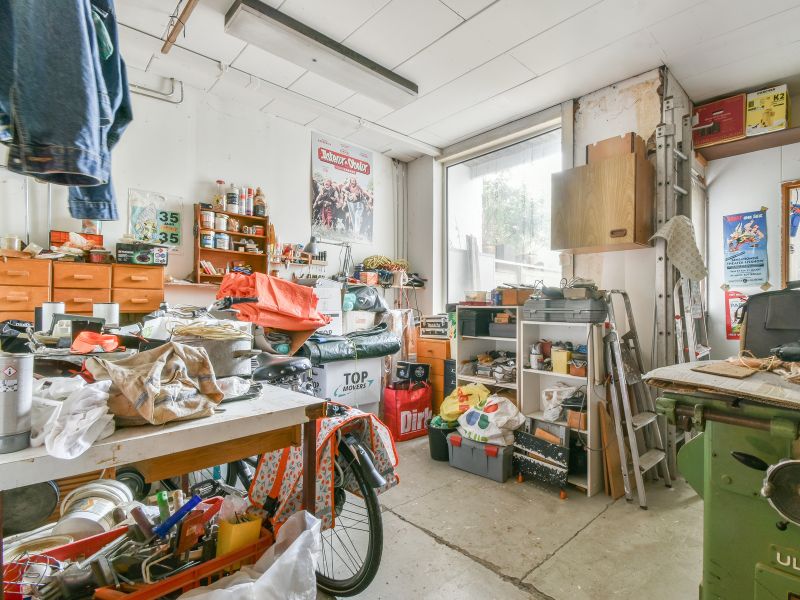
4. Before you start
Don’t jump in without grounding yourself first.
You don’t need a perfect plan – just a calm mindset and a few basics:
- A trash bag for obvious garbage.
- A donation box for items you no longer need.
- A timer – 10 or 20 minutes max.
- A bottle of water – stay hydrated.
- Some music or a podcast to soften the silence.
If you feel completely frozen and if your house is severely cluttered, start by clearing a path – just enough space to move safely through a room. Put those items either in the trash bag or the donation bag.
That alone builds confidence and helps your brain register progress.
Most importantly: remind yourself you’re not cleaning for perfection. You’re creating space for peace.
If emotions come up – tears, frustration, even anger – let them. This is emotional work as much as physical.
Take breaks. Step outside. Breathe.
5. Start with the nearest thing – One item at a time
This is the best strategy to go for if you have no idea where to start. Don’t think about the whole house. Don’t even think about the room.
Just look at the nearest item. Pick it up. Ask yourself:
- “Where does this belong?”
- “Do I still use this?”
- “Does this add anything to my life?”
Actually pick each item up – don’t just look at it. There’s something about physically touching things that helps you decide what they really mean to you.
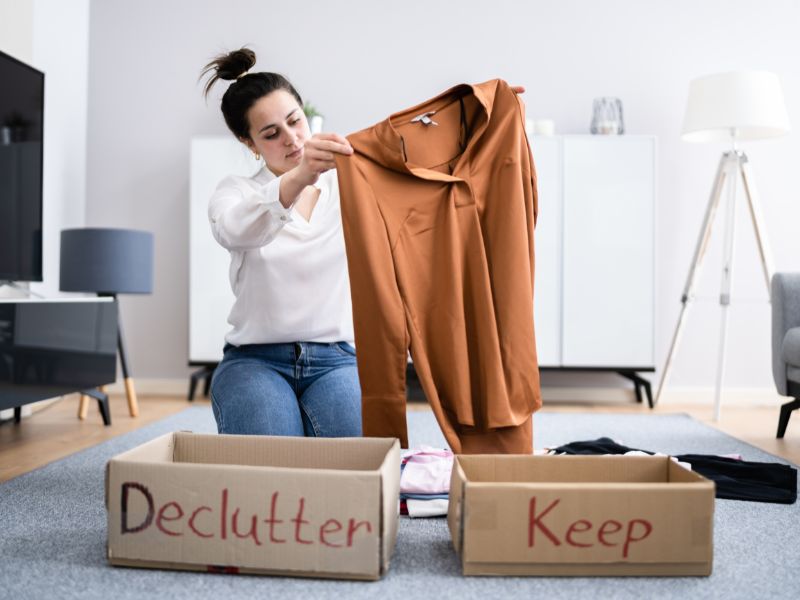
If it doesn’t have a home, decide: keep, donate, or toss.
And don’t overthink each item. Give yourself five to ten seconds to decide.
Fast choices build momentum and keep your brain from slipping into analysis mode, and you can make a decision before your brain gets time to bring up emotions and stories attached to the item in question.
You can use a stopwatch if you need it.
If it belongs in another room, place it in a small “relocate” basket and take it later – but don’t leave your zone yet.
When you feel overwhelmed, remember: you’re not cleaning your house – you’re just making one small decision at a time.
And when you clear even a small patch – a table corner, a dresser top – pause and look at it.
That’s a visible win. Let it sink in.
It’s proof that you’re capable of change, and it will energize you to move forward.

6. Separate the mess from the grime
Don’t try to declutter and deep-clean at the same time. They use completely different types of energy.
First, remove the clutter. Once you can see your surfaces again, then wipe them down, sweep, or vacuum.
It’s much more satisfying to clean when you’re not tripping over piles.
And that visible result – the shine, the smell of clean air – gives your brain a burst of motivation to keep going.
Every shiny, open space is a mental reset – proof that peace is returning one surface at a time.
7. Create a No-Pressure sorting system
You don’t need fancy bins or labels – just a few clear categories.
- Keep: things you use and love.
- Donate: things someone else could use.
- Maybe: things you’re unsure about – revisit in 30 days.
- Memory: things you want to treasure intentionally.
That “Maybe” box is key for emotional pacing. It gives your heart time to catch up with your logic.
Set a reminder to review it later – and you’ll often find most of it can go.
And once your donation bag or box is full, take it out immediately. Leaving it around turns it right back into clutter. That small act of removal is deeply freeing.
Decluttering isn’t about speed; it’s about comfort at your own pace – with each decision moving you toward lightness. The only thing is that you need to start somewhere.

8. Retrain how you think about stuff
Every time you hesitate to let something go, ask:
“What is this costing me – in space, time, and peace?”
Clutter takes energy. You dust it, move it, work around it, and feel guilty about it.
Instead of asking “What if I need it later?”, ask “What if keeping it keeps me stuck in this clutter?”
You can also build small habits that rewire your relationship with things:
- Wait 24 hours before buying non-essentials. Most impulses fade when given time.
- Keep a “wishlist” note in your phone instead of buying impulsively. If you still want it after a week, it’s probably worth having.
- Journal about what triggers your urge to hold on or shop. Awareness changes everything.
- Unfollow accounts that fuel comparison or make you want to buy more. Protect your peace by curating what influences you.
- Take a “no buy” month. Focus on using what you already own instead of adding more.
- Practice gratitude for what you have. A grateful mind quiets the constant need for more.
- Create one small “home” for every item you own. When everything has a place, decision-making becomes easier.
- Name your values. Ask, “Does this support the life I’m building, or the one I’m trying to leave behind?”
- Visualize the space you want to live in. Before you buy or keep something, picture where it would go. If there’s no spot, you don’t need it.
- Remind yourself that memories live in you, not your things. This thought alone can release so much guilt and attachment.
Decluttering doesn’t just lighten your home. It rewires your brain toward contentment.
9. Let go of the guilt and fear of waste
So many people hold on to things out of guilt.
“I spent money on this.”
“It’s still good.”
“My mom gave it to me.”
But keeping something out of guilt doesn’t honor it – it just traps you in it.
Letting go isn’t wasteful. It’s an act of release. It says, “This item served its purpose. I’m grateful, and now I’m letting it move on.”
When you donate something, imagine the relief of someone who actually needs it.
That mental shift transforms guilt into grace.

10. Learn to live with empty space
For many hoarders, empty space feels uncomfortable. It can feel lonely or “unfinished.”
But emptiness is not a loss – it’s a pause. It’s room to breathe.
Let yourself sit in it.
Notice how much calmer your mind feels when your eyes don’t land on clutter.
That quiet space? It’s not asking to be filled – it’s asking to be felt.
An open surface isn’t just easier on the eyes – it’s a reset for your mind. It’s proof that peace is possible again.
When you start craving that calm more than you crave new things, you’ll know your mindset has changed.
11. Ask for help without shame
You don’t have to do this alone.
If you have a trusted friend, family member, or even a professional organizer – ask for help.
Sometimes the best thing someone can do for you is hand you one item at a time and ask, “Where should this go?”
That gentle rhythm keeps you from spiraling.
If you worry about judgment, set boundaries upfront:
“I need help, not advice. Just help me stay focused.”
Needing help doesn’t mean you’ve failed. It means you’re human – and you’re brave enough to reach out.
12. Beware of Digital Hoarding too
Clutter isn’t only in drawers and closets.
It hides in your phone too – thousands of photos, notes, files, screenshots, and saved posts that weigh on your mind even when you can’t see them.
If you have kids, you know how many photos they can click in a second (insert *eye-roll*)
Start small here too:
- Delete five screenshots today.
- Unsubscribe from one email list a day.
- Clean your desktop once a week.
Digital clutter drains your focus the same way physical clutter drains your calm.
Make it a ritual – five minutes a day to tidy your digital world.
Choose a daily time slot, set a timer, and remove five pieces of digital or physical info.
You’ll be amazed at how freeing it feels.

13. When it’s more than clutter
Sometimes, hoarding runs deeper than habits. It can be tied to trauma, loss, depression, or anxiety.
If you notice intense distress when you try to let go – or if clutter is severely impacting your daily life – it’s okay to reach out for professional help.
If you worry about therapy, remember that it isn’t about judgment. It’s about learning new ways to feel safe without holding on to everything.
There’s no shame in needing therapy because healing often starts with support.
14. Make decluttering a gentle routine
Don’t think of decluttering as a one-time event. Think of it as a rhythm.
You can try:
- A “one surface a day” rule – clear one counter, dresser, or shelf.
- A weekly donation drop-off.
- A 10-minute nightly reset before bed.
Keep one ongoing “donation bin” in your closet or laundry area. Once it’s full, it’s ready to go.
It’s not about speed. It’s about momentum – gentle, steady, forgiving momentum.
15. Healing through letting go
Something beautiful happens when you start letting go.
You stop chasing “someday” and start living “right now.”
You rediscover your home – the corners you couldn’t see under piles, the colors you forgot you loved. You feel lighter, more present, more you.
Clutter thrives in shame and secrecy. But once you start facing it with compassion, it loses its power.
Remember, you’re not just cleaning, you’re reclaiming your peace.
Conclusion: You can always begin again
No matter how long it’s been, no matter how bad it feels, and no matter how many times you have failed, you can start again.
Every day is a fresh opportunity to start.
You don’t need to fix everything this week. You just need to start with one small decision.
The home you want is waiting underneath the layers – and you don’t have to earn it by being perfect. You only have to begin.
So take a breath. Pick one item. Make one choice.
And when you do, you’ve already started your way back home.
Related posts:
- How to Stop Hoarding Clothes (A Step-by-Step Plan to Declutter Your Wardrobe)
- How to Declutter when You Are Stuck and Overwhelmed with Clutter
- The Only 5 Decluttering Questions You’ll Ever Need (Free PDF)
- 50 Closet Organization Hacks That’ll Change How You Use Space Forever
- How to Stop Overbuying Clothes & Build a Closet You’ll Actually Wear
- What To Do After Decluttering Your Closet (So You Don’t End Up Hoarding Again)
- How to stop accumulating clutter before it starts
- 17 common decluttering mistakes you don’t know you’re making (&how to avoid them)
- 100+ things to declutter from your home right now
- 36 ten-minute decluttering tasks to organize your home easily